
How to Check Criminal History in Saline County
Start with the question the record must answer. Use the county-endorsed Judici Saline County index to learn whether prosecutors filed a case and to trace its docket. The Circuit Clerk is the official custodian for filed charges, hearing entries, judgments, sentences, and certified court copies. Police narratives, booking sheets, and current jail status come from other offices.
Gather a full name, spelling variants, date of birth when lawfully available, an event or case number, and an approximate date. A common name alone is weak evidence. Match the county, case number, age or birth year, charge, and disposition. Records may lag, charges may change, and a sealing or expungement order can restrict a public result.
- Search Judici by party name or case number for a filed Saline County matter.
- Compare identifiers and docket dates, then note the case number and charge history.
- Ask the Circuit Clerk for the official file, older material, or a certified judgment.
- Contact the sheriff or arresting city police department for incident and booking records.
- Use ISP CHIRP when statewide Illinois conviction information is the needed product.
Three Saline County Answers
Judici, the jail, and CHIRP may give different answers without any one being wrong. The sheriff’s file reflects the event and charges asserted at booking. The State’s Attorney may change, add, or decline charges before court. The clerk records what was filed and how the judge resolved it. CHIRP reports public Illinois conviction information sent to the state repository, not each local contact.
Follow the sequence instead of treating one result as a full history. Recent custody belongs with the detention center. A filed charge and outcome belong with the clerk. A statewide conviction inquiry belongs with ISP. If an arrest cycle on a person’s own state transcript lacks its disposition, ISP Access and Review supplies a correction path.
Record flow: Arresting agency → county booking → State’s Attorney review → Circuit Court file → ISP disposition update.
Official Illinois Background Checks
The Illinois State Police Division of Justice Services, Bureau of Identification maintains the central repository. Its Criminal History Information Response Process, or CHIRP, handles Uniform Conviction Information Act requests. Illinois conviction information is public, but CHIRP uses an account and transaction workflow. It is not an anonymous people search.
The official CHIRP portal shows the state entry point used by Saline County residents.
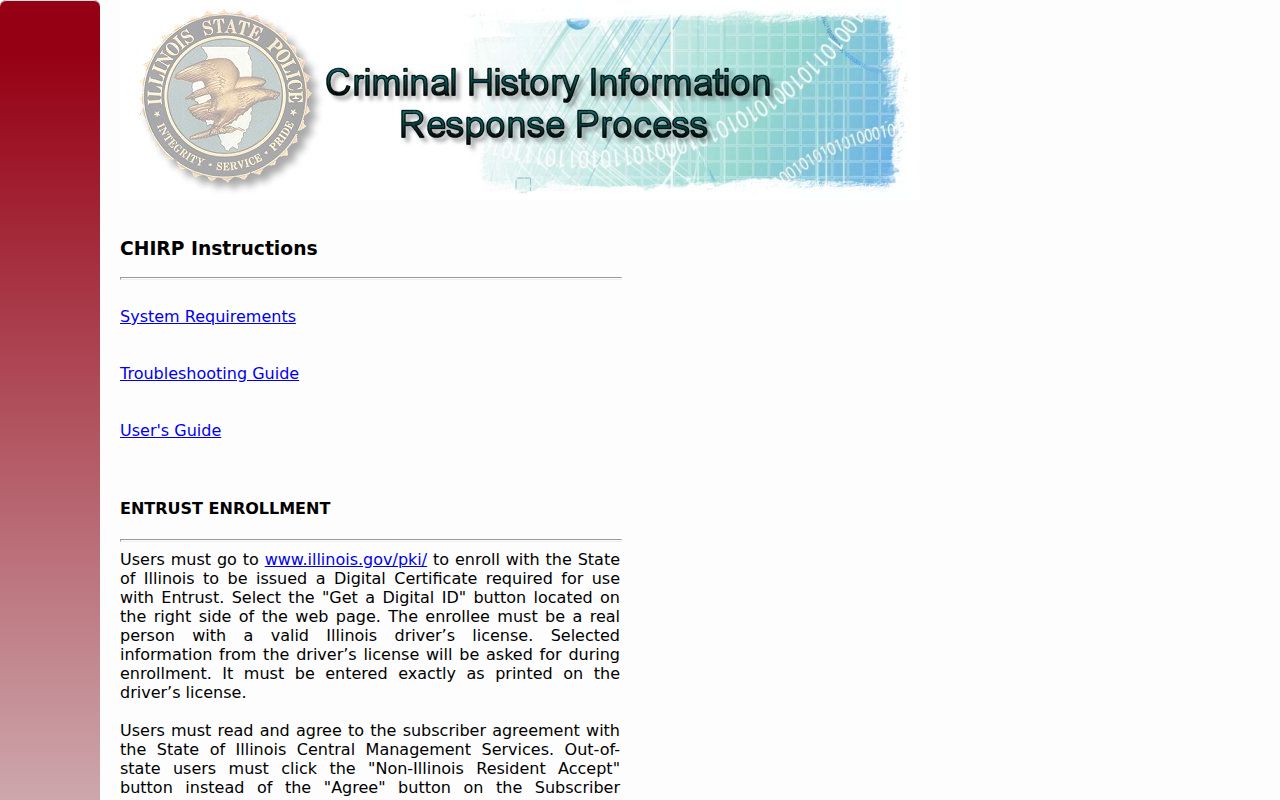
The screen leads to a paid repository request, not the local court pleading or a current county booking record.
A name inquiry may return a possible match but cannot confirm identity as well as fingerprints. An ISP-licensed live-scan vendor captures prints for an electronic fingerprint request. People reviewing their own fuller Illinois transcript can use free Access and Review, which may show non-conviction material excluded from a public UCIA response.
| ISP product | Fee | Limit |
|---|---|---|
| Electronic name inquiry | $10 | Not fingerprint-confirmed |
| Manual name inquiry | $16 | Paper processing |
| Electronic Illinois fingerprint inquiry | $15 | Vendor fee is separate |
| Access and Review | Free | One’s own record |
CHIRP Fields for Saline County
CHIRP asks the user to complete an authenticated transaction. Enter identifying data with care and keep the receipt. A close name result should be checked against the Saline County court disposition because aliases, misspellings, and delayed reporting can cause doubt. The state fee buys a repository response, not the underlying pleading or police report.
| Field | Purpose | Note |
|---|---|---|
| Account registration | Authorizes the transaction | Required for the workflow |
| Subject name | Finds possible records | Use full spelling and known variants |
| Identifiers | Separates similar names | Use permitted facts |
| Payment | Funds the inquiry | Required when a fee applies |
The official ISP fee page is the source to check before ordering. A live-scan provider sets its capture charge separately.
Types of Criminal Records
Criminal records are separate products made at different stages. Police and deputies write incident and arrest reports. The jail makes intake, property, photograph, and biometric booking records. Prosecutors create the filed charge, while the Circuit Clerk maintains the public court file. ISP associates reported fingerprint events and dispositions with a state identification number.
Warrants may arise inside a court case, but operational details can stay restricted. Circuit court services supervise probation. IDOC supervises mandatory supervised release. The Illinois Prisoner Review Board handles release or revocation decisions where applicable, and the Illinois Sex Offender Registry is a distinct public safety system.
- Arrest and booking records: local accounts of the initial event.
- Court case files: charges, docket steps, rulings, outcomes, and sentences.
- State conviction entries: reported Illinois conviction data.
- Warrants: court orders verified through the sheriff and docket.
- Supervision and registry records: separate probation, IDOC, parole, and registration sources.
Saline County Record Offices
Two downtown Harrisburg counters hold most county-level answers. Their close location does not merge their legal duties. Do not ask the County Clerk and Recorder for a criminal case file; that office is separate from the Circuit Clerk. Call first for archived files, certified copies, or records whose fees are not posted.
The official Circuit Clerk page identifies the Saline County court-record counter.
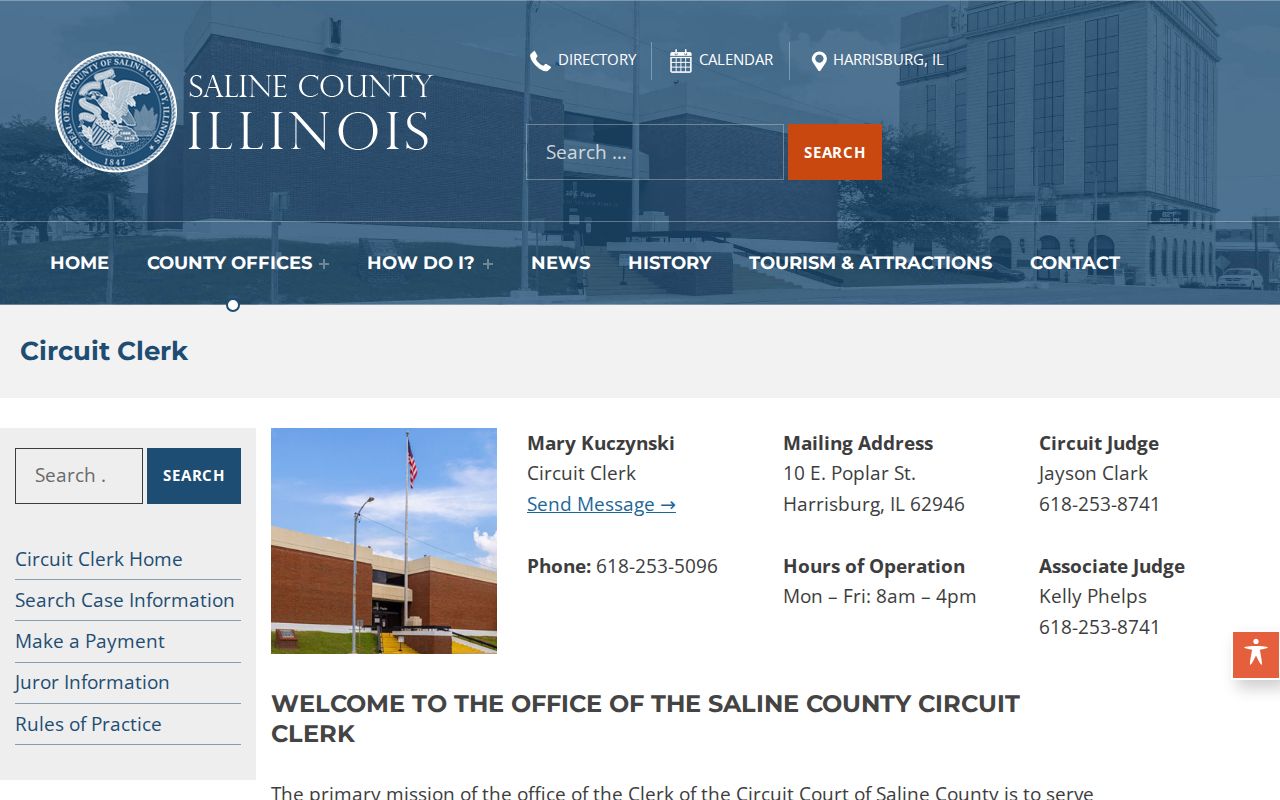
Its contact details route requests for filed charges, court events, judgments, sentences, and certified copies.
Saline County Circuit Clerk
10 E. Poplar Street
Harrisburg, IL 62946
618-253-5096
Monday-Friday, 8:00 a.m.-4:00 p.m.
Saline County Sheriff
1 N. Main Street
Harrisburg, IL 62946
618-252-8661
Operations listed 24/7
The clerk supplies filed court material. The sheriff handles sheriff reports, county booking and custody questions, warrant verification, and registration work in sheriff jurisdiction.
What a Saline County Criminal Record Shows
The fields depend on the source. A docket can show the party, case number, charge, statute, scheduled events, disposition, sentence, and financial entries. A booking record adds the arresting agency, intake event, alleged booking charges, fingerprints, and custody data. A state conviction response is not an image of the county court file.
| Name & Identifiers | Recorded name, aliases, birth facts, and agency or case identifiers when public. |
|---|---|
| Arrest / Booking Data | Arresting agency, intake event, alleged charges, and custody status. |
| Charges & Statutes | Filed offense language, class, and Illinois statute. |
| Disposition | Dismissal, plea, acquittal, conviction, or other result. |
| Sentence | Jail, prison, probation, fines, conditions, or credited time. |
| Custody / Supervision Status | County custody, IDOC placement, probation, or supervised release. |
No Saline County Online Roster
No official county booking blotter or inmate roster was found. Call the detention center at 618-252-8661 for current custody and ask whether a focused FOIA request is needed for a booking document. Do not replace the missing official tool with a commercial mugshot or people-search site.
The 2024 IDOC inspection recorded 57 people in a 108-bed facility on one inspection date. That is not an annual booking count. It also documents a purchased Live Scan machine and camera upgrades, which support biometric and video records but do not make every file public without review.
The Illinois Sheriffs’ Association county profile supplies a separate facility profile and uses 110 beds.
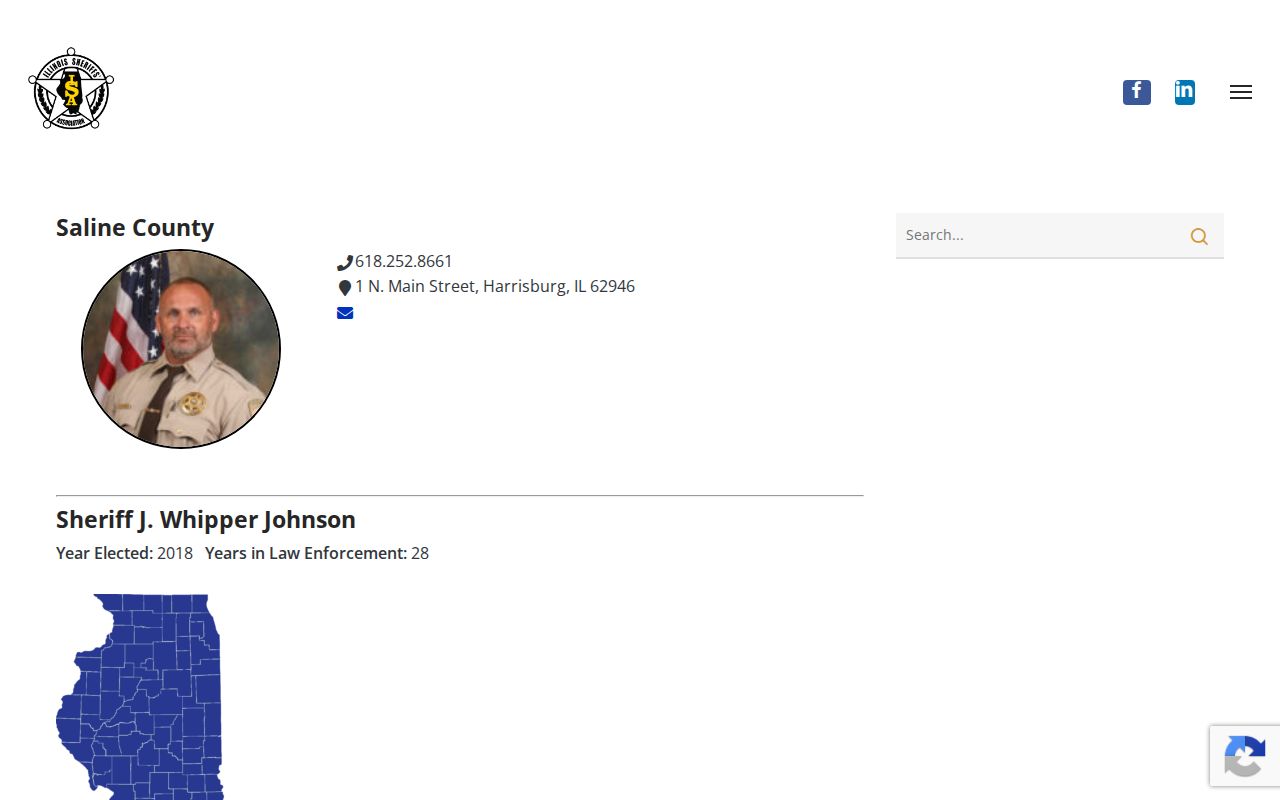
The dated state inspection is the better source for a precise 2024 capacity, so the difference should be attributed rather than hidden.
Public Access Laws
Illinois opens many records but preserves privacy, safety, juvenile, sealed-record, and active-investigation limits. A focused request identifies the agency, event number, date, place, exact record component, and preferred format. Judicial files follow court access rules, while executive agencies respond under Illinois FOIA.
Key Statutes:
5 ILCS 140 - Illinois FOIA governs requests, exemptions, and response rules.
20 ILCS 2635 - UCIA makes Illinois conviction information public through the state process.
20 ILCS 2630 - the Criminal Identification Act governs state history records and clearing.
730 ILCS 152 - the notification law controls public registry disclosure.
Saline County Sheriff FOIA
The official sheriff page links a “Submit (FOIA) Request” email route.
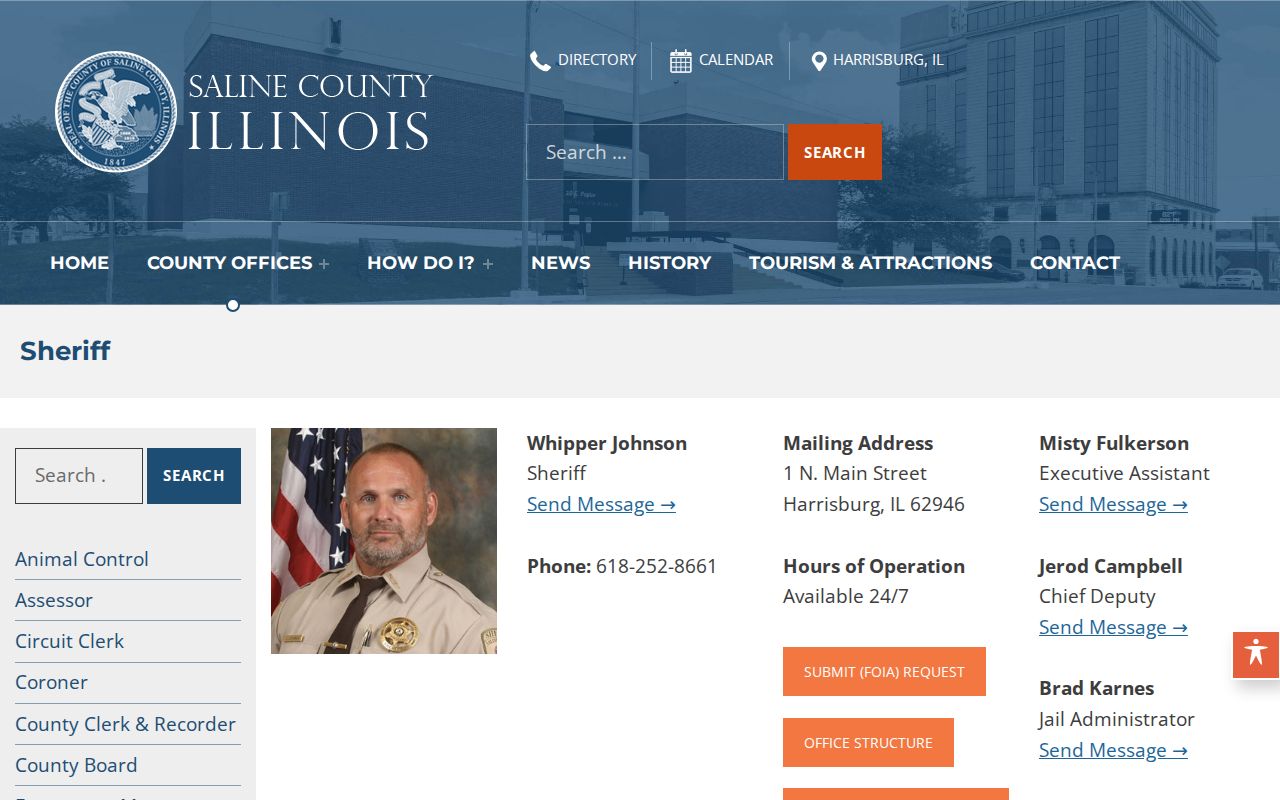
The page also confirms the Main Street office and 24-hour phone used for booking, custody, warrant, and sheriff-record questions.
If its generated link fails, address the request to info@salinecosheriff.com. State that the request is under Illinois FOIA, describe the exact sheriff-created record, and give the event number, date, location, names, and preferred format when known.
Do not send a Harrisburg, Eldorado, or Carrier Mills police narrative to the sheriff merely because a person later entered county custody. Send the narrative request to the arresting city agency, the booking request to the sheriff, and the pleading request to the Circuit Clerk. No official sheriff incident or certified-booking fee was located, so ask for a quote.
Sealed, Expunged & Restricted
Illinois uses both expungement and sealing. Expungement generally destroys or returns qualifying arrest records. Sealing restricts public access while keeping authorized criminal-justice access. Eligibility depends on the outcome, offense, sentence, waiting period, and later history. Juvenile and automatic-clearing rules use distinct paths.
Start with the county case and arrest history. A person can use ISP Access and Review for their own transcript. File the approved petition with the Circuit Clerk, serve the agencies named by the packet, and track objections or a hearing. ISP lists $60 to process a court expungement or sealing order. Confirm local filing and copy charges with the clerk.
Use the Illinois Courts approved forms. A missing public result alone does not prove that a record was cleared.
Saline Warrants and Supervision
The county publishes no official active-warrant database in the reviewed sources. Verify a warrant with the sheriff at 618-252-8661 and check Judici or the Circuit Clerk for a public case order. Staff may withhold sealed or operational facts. Resolve an unsafe warrant issue through counsel and the court instead of making an unplanned counter visit.
Probation and parole also require separate checks. First Judicial Circuit court services supervise court-ordered probation. IDOC’s Individuals in Custody search covers state custody and may show state supervision, but not people held pretrial in the county jail. The Prisoner Review Board makes release and revocation decisions where applicable; IDOC Parole Division carries out community supervision.
Criminal Records by City in Saline County
Harrisburg, Eldorado, and Carrier Mills police create their own incident and arrest reports. Illinois has no separate municipal court of record for these places, so city ordinance, traffic, misdemeanor, and felony cases route into the circuit structure when filed. City police material stays with the agency, county booking stays with the sheriff, and the clerk holds the court case.
The county municipality directory provides the official city contact route.
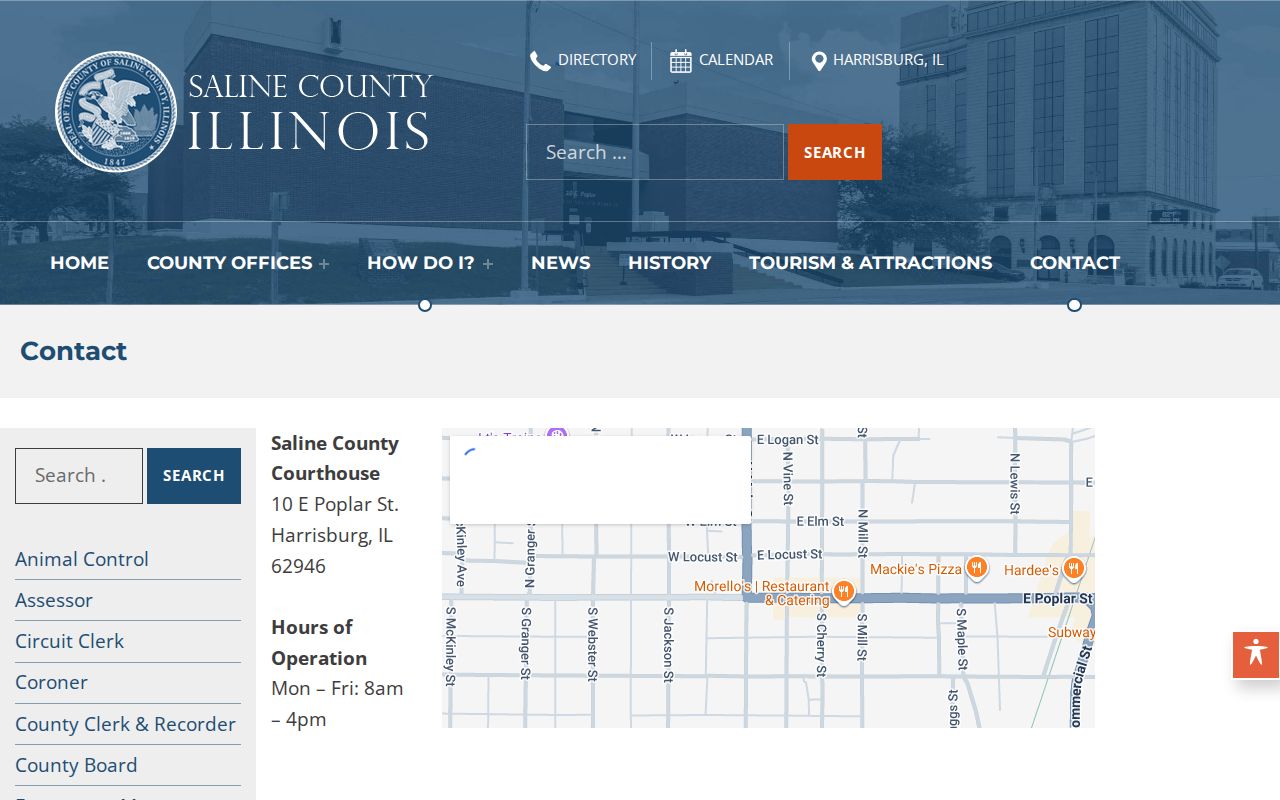
Use those municipal contacts for city-created police reports, then use the county jail and Circuit Clerk for later stages.
Harrisburg Criminal History
8,219 residents in 2020 · City records and county counters share the county seat.
Eldorado Criminal History
3,743 residents in 2020 · EPD narratives stay local while jail and court records route to Harrisburg.
Carrier Mills Criminal History
1,672 residents in 2020 · Village police records remain distinct from county files.
Saline County Records Through Time
The official county government home anchors present-day access to Saline County offices and courthouse services.
Its directory is the starting point when a record question must be routed to the clerk, sheriff, or another local custodian.
Saline County was created in 1847. Raleigh served as the first county seat before Harrisburg became the hub. Older court, jail, and civic files may not sit in modern databases. The Illinois Regional Archives Depository Saline guide is the better route for historical and genealogical work when a current clerk search does not reach the needed era.
Access is still changing. Illinois opened free remote access in re:SearchIL to nonconfidential reviewing-court documents filed on or after April 1, 2025. That does not equal complete online access to every Saline County trial file. Judici and the Circuit Clerk remain the main local circuit-court routes while broader statewide county access develops.